2026-07-21 · 6 min · image-generation · multimodal · diffusion · qwen

Why read this
Nichelast 15%A summary of Qwen-Image-3.0's announced capabilities using its own examples; no architecture or benchmark exists to check.
- Widely used
Image & video generationAPI onlyProprietaryIntro model
How this was scored
- Is it new?
- 1 of 3: An incremental tweak
- Can I trust it?
- 0 of 3: Restates claims
- Can I run it?
- 1 of 3: API-only, gated or restrictive licence
- Will I understand it?
- 0 of 3: Describes, no mechanism
- Can I act on it?
- 0 of 3: Nothing to act on
- Will it last?
- 0 of 3: News that expires in weeks
- Does it affect many?
- 2 of 3: A widely used model, tool or lab release
- Only here?
- 0 of 3: Same as the press release
Score 17 of 100, ranked 576 of 577 rated articles. Each question is answered 0–3 by hand, and a 3 is rare. How articles are scored
Every image model since the first Stable Diffusion has been optimised, implicitly, for one thing: making a picture you'd want to look at. Qwen-Image-3.0 — the third generation of Qwen's image line — says the flex out loud and then walks away from it. Its whole pitch is one Chinese word, 实 ("Real"): not prettier, but useful enough to put in a production pipeline. Where 1.0's keyword was "Precision" and 2.0's was a five-word mouthful ("Precision, Variety, Completeness, Beauty, and Authenticity"), 3.0 collapses to a single claim and splits it three ways — Rich Content, Authentic Details, Deep Knowledge.
Two things to set expectations first. This was a capabilities announcement, not a tech report: Qwen published no architecture, parameter count, or benchmark table — only examples. And unlike the open-weight 1.0 and 2.0 (Apache-2.0 releases the community could run), 3.0 arrived closed, reachable through Qwen Chat and Alibaba's API rather than a weights download. So this is a piece about what it claims to do and how to reason about it — with the model's own examples, the levers behind them, and an honest look at where it cracks.
Rich Content: how much fits in one image
The demo that opens the announcement looks like a single tidy math slide. It isn't — it's one cell of a 3×3 grid, generated in a single pass, where every cell is a different dense infographic: projectile motion, the Sylow theorems, a parasitology explainer, a bank internal-control diagram, a cell-DNA comparison, and more. Nine unrelated technical posters, each with its own Chinese and English text, formulas, and charts, laid out without bleeding into one another.
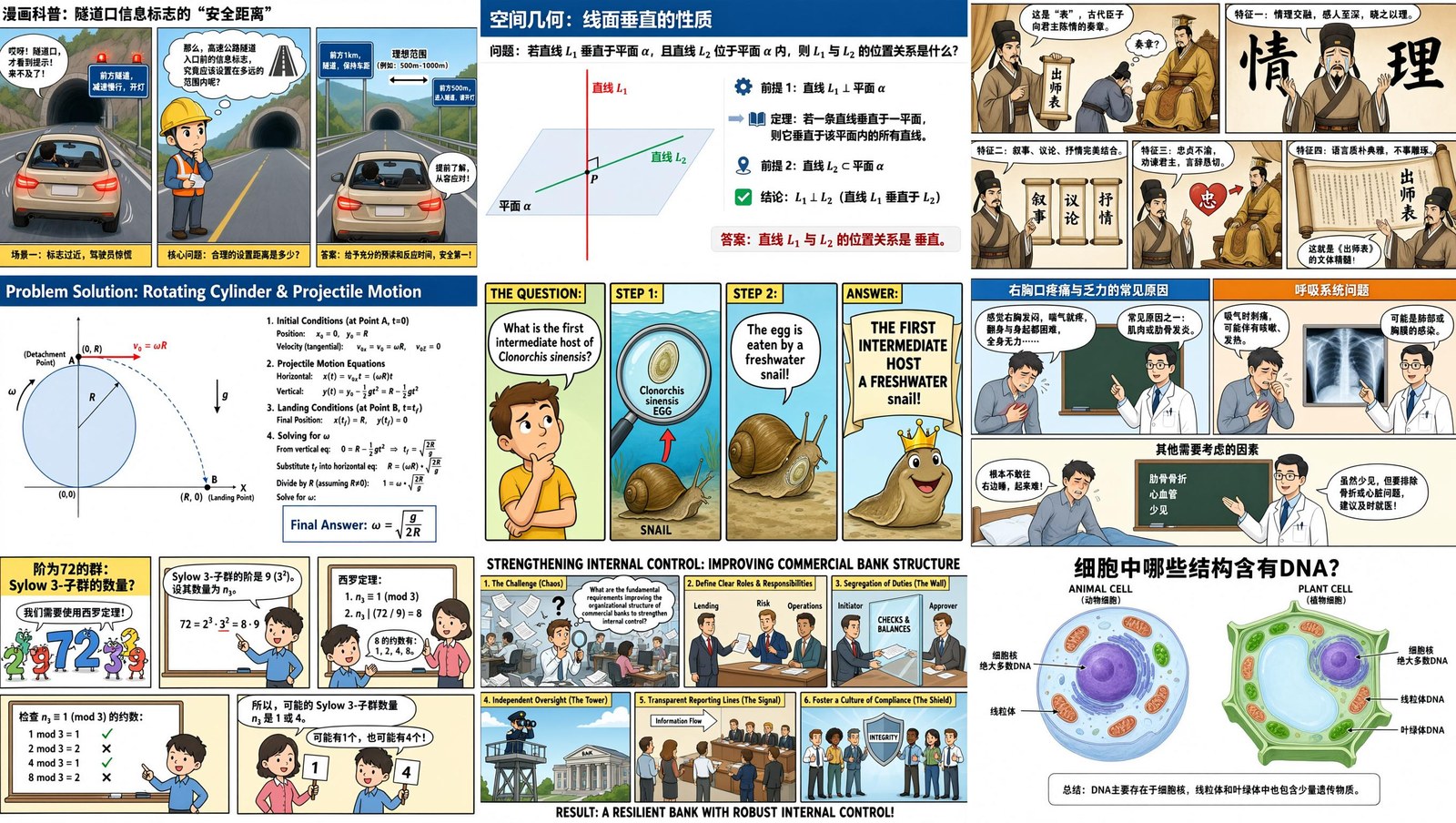
The thing actually being demonstrated isn't the grid — it's the prompt budget. Describing that grid precisely takes about 3.7k tokens, and 3.0 raises the instruction ceiling to 4.5k tokens, several times what 2.0 would reliably follow. "How much you can draw" turns out to be gated by "how long an instruction the model will still honour." Drag it:
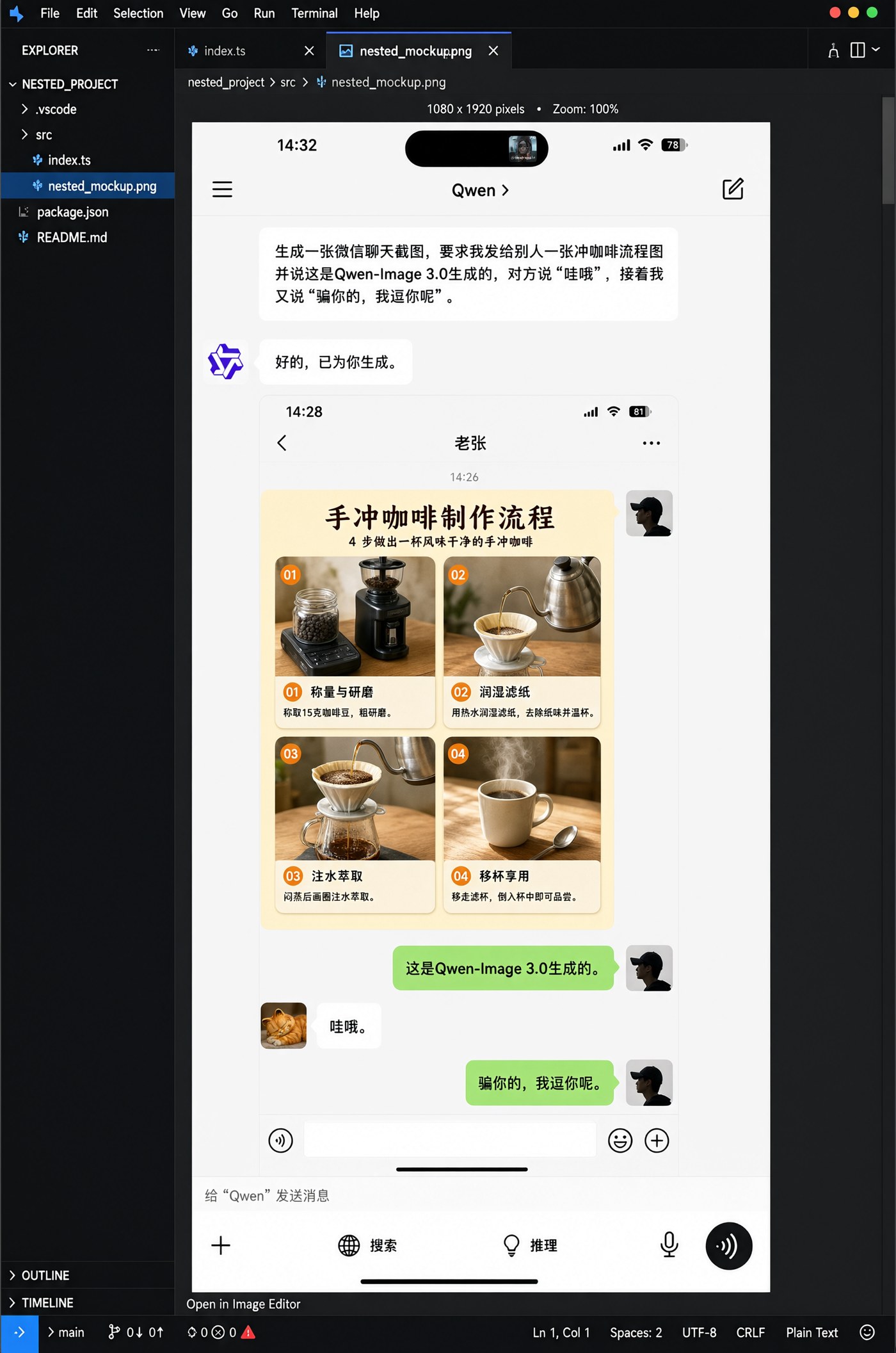
There's a second axis to "rich": not just width, but depth — interfaces nested inside interfaces. One instruction renders, outer to inner, a VSCode window holding a Qwen Chat window holding a WeChat thread holding a pour-over-coffee poster, each preserving its own authentic chrome.
Authentic Details: how finely it draws
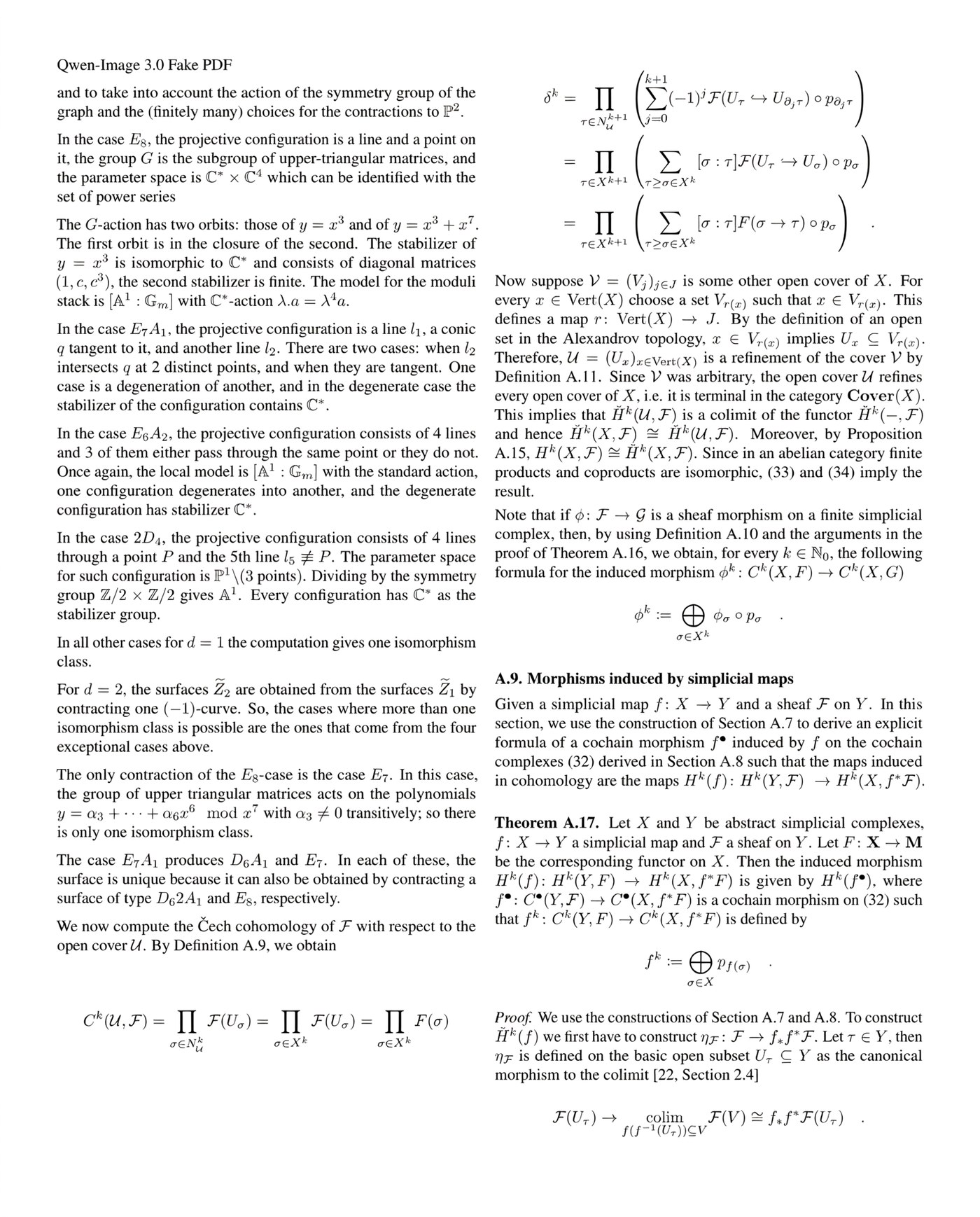
If Rich Content is about how much, Authentic Details is about how fine. The headline number here is 10px: text small enough that most generators turn it into a texture that merely looks like writing, which 3.0 claims to keep genuinely legible. Legible small text is the single hardest thing in image generation — it's where the difference between "renders language" and "renders squiggles" lives.
The stress test is an academic paper: a full page of algebraic-geometry derivations with superscripts, subscripts, curly braces, fraction bars, and multi-line aligned equations — the kind of layout where a single wrong glyph is obvious.
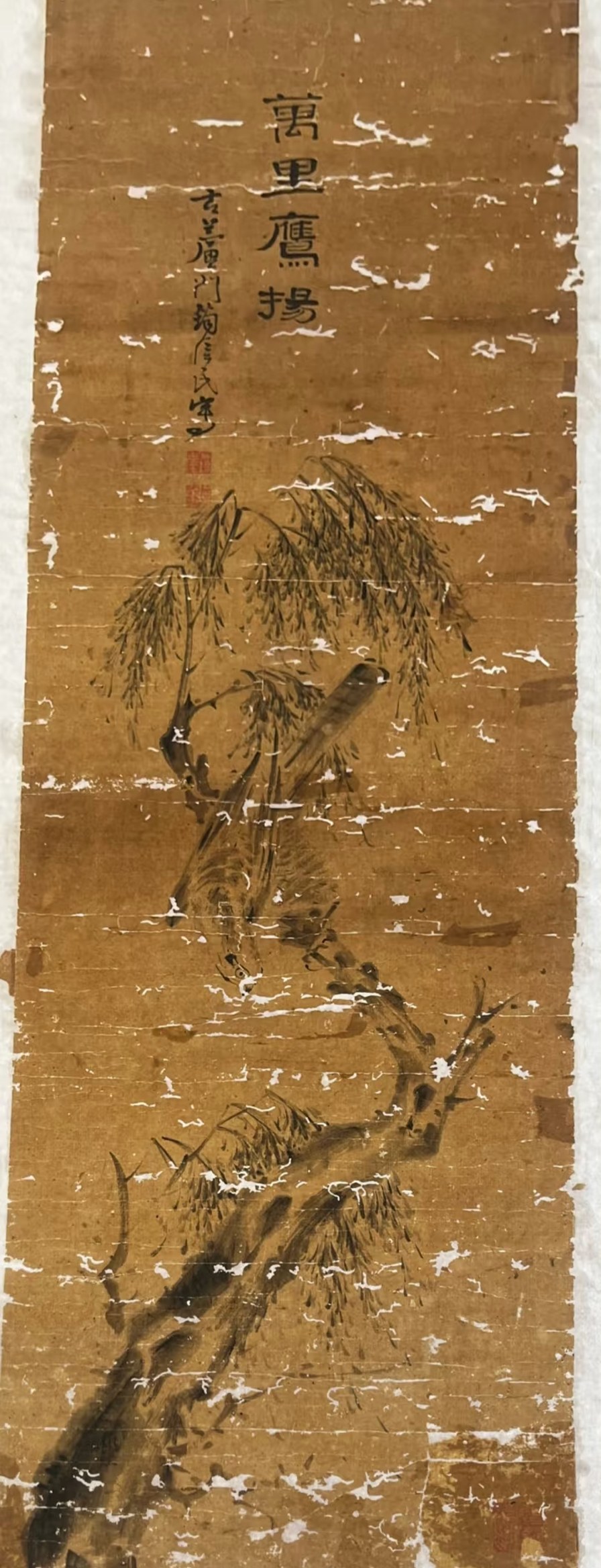
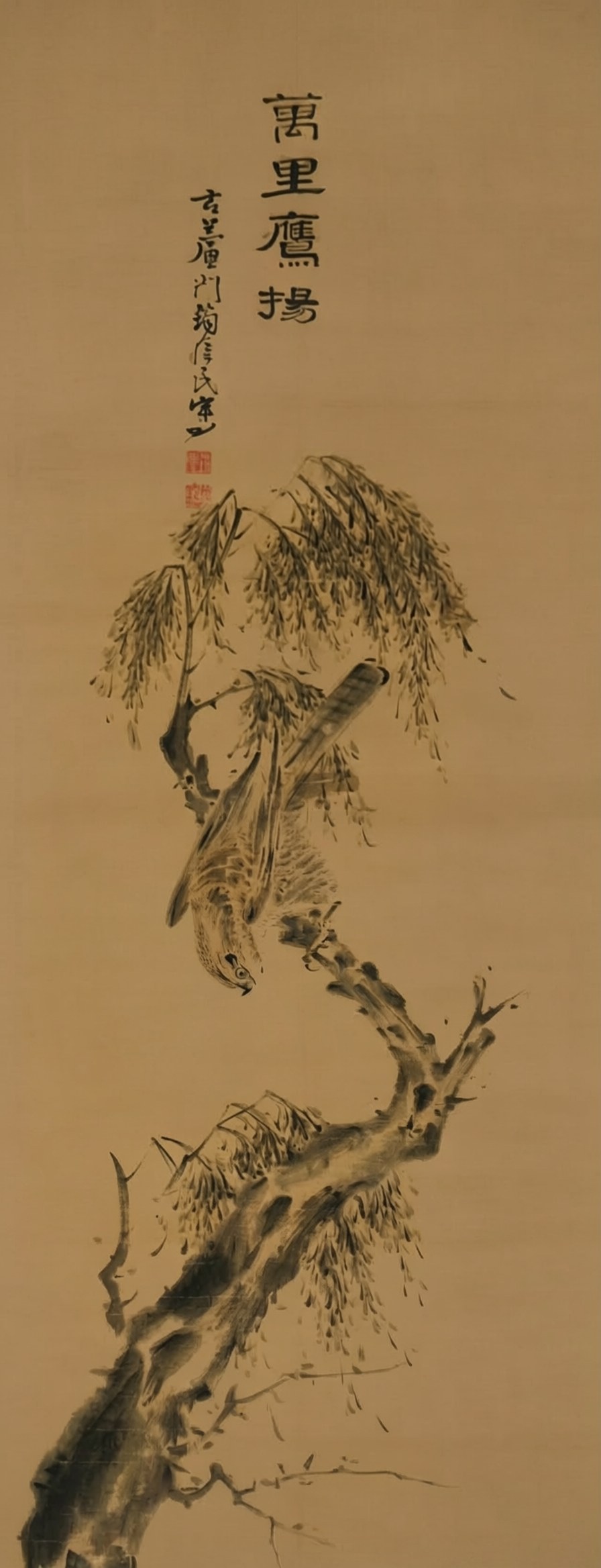
The same precision shows up in editing, not just generation. Given a damaged traditional ink-wash painting, the model restores the missing regions — matching brushwork, ink gradients, and feather texture, removing mould spots — while leaving the original composition intact.
Deep Knowledge: how broadly it draws
The third axis is coverage. Qwen claims native rendering across 12 languages (Japanese, Korean and Spanish are shown), 100-plus artistic styles, and a spread of real UI grammars — web pages, games, livestream overlays — backed by enough world knowledge to build things like a scientific figure from a photo. Given an insect photograph, the model keeps the subject and adds taxonomic labels, morphological annotations, a magnified detail inset, and a scale bar: a publication-ready research figure.
It can even reach outside itself: the model connects to the web to pull current facts — the announcement generates a weather-forecast card for a specific city and date — and composes with known figures, e.g. staging Qi Baishi and Van Gogh co-hosting a livestream. This is the "productivity tool, not toy" thesis in one line: newspapers, storyboards, exam papers, and UI mockups are the target, not wallpaper.
The catch
Here's where the honesty matters. Every image above is Qwen's own curated demo, and independent testers have been blunter than the blog: reports describe it as roughly a notch below the best proprietary generators (GPT-Image-class models, Nano Banana Pro), with real gaps once you leave the reel — Korean text with typos, charts that break, and data-plotting tasks (a GDP chart) with points placed in the wrong spots. Legible-at-10px and accurate-at-10px are different claims, and factual layout — where the numbers have to be right, not just crisp — is exactly where it slips.
None of that erases the direction, which is the interesting part. Optimising an image model for deployable output — long controllable prompts, small legible text, nested real UIs, factual layout — is a more useful target than one more bump in aesthetic quality, even when the first release doesn't fully hit it. The trade for it is openness: 1.0 and 2.0 were weights you could run; 3.0 is an API you call.
The take
Qwen-Image-3.0 is best read as a repositioning, not a benchmark win. "Real" is a good target — image generation is far more valuable as a layout-and-typography engine for documents and interfaces than as an art toy — and the three levers it leans on (a 4.5k-token instruction ceiling, a 10px text floor, and world-knowledge grounding) are the right ones for that job. Just hold the demos and the independent tests in the same hand: the ceiling is real, the floor is real, and the accuracy at that floor is still catching up. It pairs naturally with the site's piece on Qwen Audio 3.0 TTS — the same "3.0, make it deployable" push, one modality over.
Source: Qwen-Image-3.0: Rich Content, Authentic Details, Deep Knowledge (Qwen team, 2026-07-16). Architecture, parameters and benchmarks were not published with the release; availability and independent-testing notes via secondary coverage. All images are Qwen's official examples, shown for commentary.